

Commercial interior design focuses on creating functional and professional spaces for businesses such as offices, retail stores, restaurants, and corporate environments. The main goal is to improve productivity, brand identity, and customer experience.
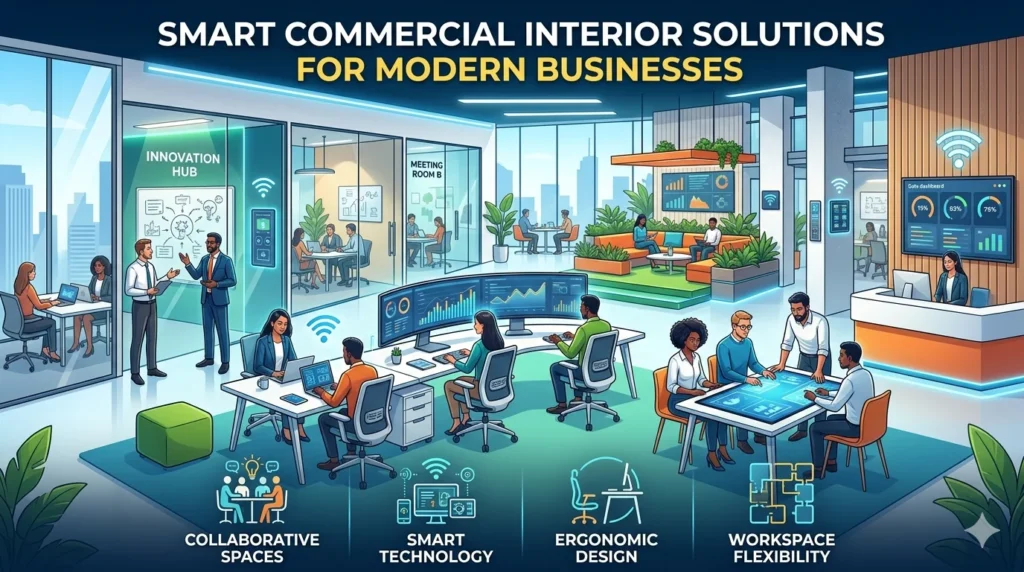
Modern commercial interiors emphasize open layouts and collaborative spaces. Offices today are designed to encourage teamwork and communication. Open-plan offices with flexible seating arrangements are becoming increasingly popular.
Ergonomics plays a major role in commercial design. Comfortable furniture, proper desk height, and supportive chairs help improve employee productivity and reduce health issues. Designers also focus on optimizing lighting and ventilation for a healthier work environment.
Brand identity is another important aspect. Commercial spaces are designed to reflect the company’s values and culture. This is achieved through color schemes, logo placement, and interior themes that match the brand image.
Durability is also essential in commercial flooring and furniture. Materials like SPC flooring, carpet tiles, and vinyl are commonly used because they can withstand heavy foot traffic while maintaining their appearance.
Technology integration is a key feature of modern commercial spaces. Smart systems for lighting, security, and climate control are widely used to improve efficiency and reduce operational costs.
Reception areas are designed to create a strong first impression. Stylish furniture, branding elements, and welcoming layouts help build trust with clients and visitors.
Retail interiors focus on customer experience. Proper product display, lighting, and navigation flow are designed to attract customers and increase sales.
Overall, commercial interior design is about combining functionality, aesthetics, and brand identity to create spaces that support business growth and success.